(
)
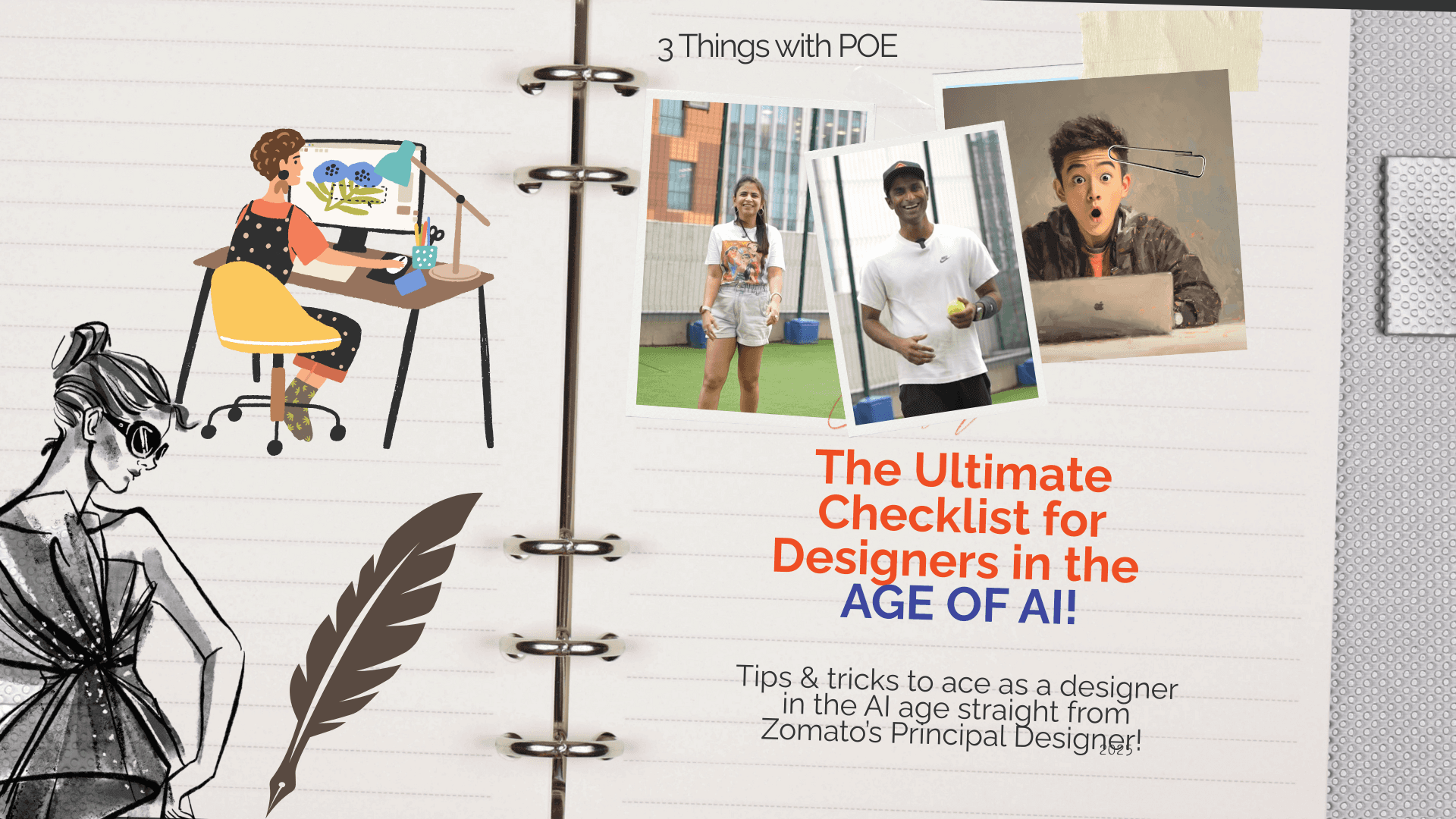
The Ultimate Checklist for Designers in the Age of AI
A practical AI-era design checklist inspired by Zomato’s design philosophy. Key lessons on UI, UX, AI integration, and building human-centred products at scale.
What Zomato’s Design Playbook Teaches About Building for Humans at Scale
AI has changed how fast we can design.
It hasn’t changed what good design actually is.
That distinction matters more than ever.
As tools like ChatGPT, Midjourney, and Claude become standard in design workflows, many teams risk mistaking speed for clarity and automation for thinking. The most enduring products, however, still win on fundamentals, especially when design serves millions of users under real-world constraints.
Zomato is one of the best examples of this balance. Its design philosophy offers a sharp, practical checklist for designers working in the AI era, not just to build faster, but to build better.
Here’s what founders, marketers, and designers can learn from it.
1. Simplicity Is Not Optional, It’s Strategic
Zomato’s design philosophy begins with three deceptively simple principles:
simple to use, functional, and high in contrast.
This matters because AI adds layers of complexity behind the scenes. The user experience must do the opposite.
In an AI-powered product, simplicity is not aesthetic preference. It is risk management.
Clear visual hierarchy, high contrast, and frictionless navigation reduce cognitive load, especially when users are making fast decisions in noisy, real-world environments.
For founders and product leaders, this is a reminder that:
AI should never make the interface feel smarter than the user
Clarity beats cleverness at scale
Design exists to remove thinking, not demand it
2. Control, Consistency, Clarity, Transparency Still Win
At the UI/UX level, Zomato anchors design around control, consistency, clarity, and transparency.
These principles become even more critical as AI systems personalise experiences dynamically.
Users must always feel:
In control of what they’re seeing
Confident that patterns won’t change unpredictably
Clear about what actions do
Informed about what’s happening in the system
In AI-led products, trust is built visually long before it’s built logically.
3. AI Works Best When It’s Invisible to the User
Zomato’s use of AI and machine learning is deeply practical, not performative.
AI helps:
Customers discover restaurants based on past behaviour
Delivery partners navigate hotspots where demand is higher
Merchants promote dishes most likely to sell in specific areas
Notice what’s missing. There is no “AI mode” button screaming for attention.
The best AI design insight here is simple:
AI should improve outcomes without announcing itself.
For marketers and product teams, this is a crucial lesson. AI adoption should be measured by usefulness, not visibility.
4. Design and Marketing Must Speak the Same Language
Zomato’s witty marketing works because the product design supports it.
Humour is preserved in the interface.
Interactions feel playful.
Design invites engagement instead of staying neutral.
This alignment matters because modern brands are experienced across touchpoints, not channels. When design and marketing are disconnected, brand personality collapses.
For growth teams, this means:
UI is part of brand voice
Product interactions are marketing moments
Design systems must support tone, not fight it
5. Real-World Constraints Shape Better Design
One of the most underrated insights comes from understanding the experience of delivery partners.
Design choices account for:
Long restaurant queues
Inaccurate addresses
Unpredictable weather and traffic
This is why Zomato favours bold visuals and high contrast. Design decisions are shaped by where and how the product is used, not just how it looks in a clean office environment.
For AI-first teams, this is a grounding reminder. Context beats abstraction every time.
6. AI Tools Are Multipliers, Not Replacements
When asked about favourite AI tools, the stack is telling: ChatGPT, Midjourney, Claude.
These tools support thinking, exploration, and ideation. They don’t replace judgment.
The takeaway for designers and marketers is clear:
Use AI to accelerate drafts, not decisions
Let tools expand options, not narrow thinking
Keep humans responsible for taste and intent
7. Great Design Lives at the Intersection of Disciplines
In the AI age, design excellence demands more than visual skill.
The three non-design skills every designer must master are:
Storytelling
Tech fluency
Business understanding
This applies just as much to marketers and founders.
AI blurs roles. Designers influence business outcomes. Marketers shape product experiences. Founders must understand systems, not just vision.
The most valuable creatives are those who can connect user emotion, technical possibility, and business impact.
8. Advice That Still Holds in an AI-First World
The advice for young designers is refreshingly timeless:
Be honest and sincere with your craft
Keep working hard
Stay updated with industry trends
AI doesn’t remove the need for effort. It raises the bar for intentional effort.
Those who combine craft with curiosity and systems thinking will stay relevant, regardless of tools.
The Bigger Insight Designers and Leaders Should Take Away
AI will continue to reshape workflows.
What it won’t change is the importance of:
Clarity over cleverness
Human empathy over automation
Context over abstraction
Zomato’s design philosophy works because it respects how people actually behave, not how tools want to be used.
That’s the real checklist for the AI age.
If you’re rethinking how design, marketing, and AI come together in your product or brand, this is the moment to step back and design intentionally. At Pursuit of Extraordinary, we help teams translate AI capability into clear design systems, brand experiences, and growth strategies that scale without losing the human touch.
📩 hello@pursuitofextraordinary.com
🌐 www.pursuitofextraordinary.com
More News
Explore insights, tips, and trends to elevate your brand.


(
)
The Ultimate Checklist for Designers in the Age of AI
A practical AI-era design checklist inspired by Zomato’s design philosophy. Key lessons on UI, UX, AI integration, and building human-centred products at scale.
What Zomato’s Design Playbook Teaches About Building for Humans at Scale
AI has changed how fast we can design.
It hasn’t changed what good design actually is.
That distinction matters more than ever.
As tools like ChatGPT, Midjourney, and Claude become standard in design workflows, many teams risk mistaking speed for clarity and automation for thinking. The most enduring products, however, still win on fundamentals, especially when design serves millions of users under real-world constraints.
Zomato is one of the best examples of this balance. Its design philosophy offers a sharp, practical checklist for designers working in the AI era, not just to build faster, but to build better.
Here’s what founders, marketers, and designers can learn from it.
1. Simplicity Is Not Optional, It’s Strategic
Zomato’s design philosophy begins with three deceptively simple principles:
simple to use, functional, and high in contrast.
This matters because AI adds layers of complexity behind the scenes. The user experience must do the opposite.
In an AI-powered product, simplicity is not aesthetic preference. It is risk management.
Clear visual hierarchy, high contrast, and frictionless navigation reduce cognitive load, especially when users are making fast decisions in noisy, real-world environments.
For founders and product leaders, this is a reminder that:
AI should never make the interface feel smarter than the user
Clarity beats cleverness at scale
Design exists to remove thinking, not demand it
2. Control, Consistency, Clarity, Transparency Still Win
At the UI/UX level, Zomato anchors design around control, consistency, clarity, and transparency.
These principles become even more critical as AI systems personalise experiences dynamically.
Users must always feel:
In control of what they’re seeing
Confident that patterns won’t change unpredictably
Clear about what actions do
Informed about what’s happening in the system
In AI-led products, trust is built visually long before it’s built logically.
3. AI Works Best When It’s Invisible to the User
Zomato’s use of AI and machine learning is deeply practical, not performative.
AI helps:
Customers discover restaurants based on past behaviour
Delivery partners navigate hotspots where demand is higher
Merchants promote dishes most likely to sell in specific areas
Notice what’s missing. There is no “AI mode” button screaming for attention.
The best AI design insight here is simple:
AI should improve outcomes without announcing itself.
For marketers and product teams, this is a crucial lesson. AI adoption should be measured by usefulness, not visibility.
4. Design and Marketing Must Speak the Same Language
Zomato’s witty marketing works because the product design supports it.
Humour is preserved in the interface.
Interactions feel playful.
Design invites engagement instead of staying neutral.
This alignment matters because modern brands are experienced across touchpoints, not channels. When design and marketing are disconnected, brand personality collapses.
For growth teams, this means:
UI is part of brand voice
Product interactions are marketing moments
Design systems must support tone, not fight it
5. Real-World Constraints Shape Better Design
One of the most underrated insights comes from understanding the experience of delivery partners.
Design choices account for:
Long restaurant queues
Inaccurate addresses
Unpredictable weather and traffic
This is why Zomato favours bold visuals and high contrast. Design decisions are shaped by where and how the product is used, not just how it looks in a clean office environment.
For AI-first teams, this is a grounding reminder. Context beats abstraction every time.
6. AI Tools Are Multipliers, Not Replacements
When asked about favourite AI tools, the stack is telling: ChatGPT, Midjourney, Claude.
These tools support thinking, exploration, and ideation. They don’t replace judgment.
The takeaway for designers and marketers is clear:
Use AI to accelerate drafts, not decisions
Let tools expand options, not narrow thinking
Keep humans responsible for taste and intent
7. Great Design Lives at the Intersection of Disciplines
In the AI age, design excellence demands more than visual skill.
The three non-design skills every designer must master are:
Storytelling
Tech fluency
Business understanding
This applies just as much to marketers and founders.
AI blurs roles. Designers influence business outcomes. Marketers shape product experiences. Founders must understand systems, not just vision.
The most valuable creatives are those who can connect user emotion, technical possibility, and business impact.
8. Advice That Still Holds in an AI-First World
The advice for young designers is refreshingly timeless:
Be honest and sincere with your craft
Keep working hard
Stay updated with industry trends
AI doesn’t remove the need for effort. It raises the bar for intentional effort.
Those who combine craft with curiosity and systems thinking will stay relevant, regardless of tools.
The Bigger Insight Designers and Leaders Should Take Away
AI will continue to reshape workflows.
What it won’t change is the importance of:
Clarity over cleverness
Human empathy over automation
Context over abstraction
Zomato’s design philosophy works because it respects how people actually behave, not how tools want to be used.
That’s the real checklist for the AI age.
If you’re rethinking how design, marketing, and AI come together in your product or brand, this is the moment to step back and design intentionally. At Pursuit of Extraordinary, we help teams translate AI capability into clear design systems, brand experiences, and growth strategies that scale without losing the human touch.
📩 hello@pursuitofextraordinary.com
🌐 www.pursuitofextraordinary.com
More News
Explore insights, tips, and trends to elevate your brand.
(
)
The Ultimate Checklist for Designers in the Age of AI
A practical AI-era design checklist inspired by Zomato’s design philosophy. Key lessons on UI, UX, AI integration, and building human-centred products at scale.
What Zomato’s Design Playbook Teaches About Building for Humans at Scale
AI has changed how fast we can design.
It hasn’t changed what good design actually is.
That distinction matters more than ever.
As tools like ChatGPT, Midjourney, and Claude become standard in design workflows, many teams risk mistaking speed for clarity and automation for thinking. The most enduring products, however, still win on fundamentals, especially when design serves millions of users under real-world constraints.
Zomato is one of the best examples of this balance. Its design philosophy offers a sharp, practical checklist for designers working in the AI era, not just to build faster, but to build better.
Here’s what founders, marketers, and designers can learn from it.
1. Simplicity Is Not Optional, It’s Strategic
Zomato’s design philosophy begins with three deceptively simple principles:
simple to use, functional, and high in contrast.
This matters because AI adds layers of complexity behind the scenes. The user experience must do the opposite.
In an AI-powered product, simplicity is not aesthetic preference. It is risk management.
Clear visual hierarchy, high contrast, and frictionless navigation reduce cognitive load, especially when users are making fast decisions in noisy, real-world environments.
For founders and product leaders, this is a reminder that:
AI should never make the interface feel smarter than the user
Clarity beats cleverness at scale
Design exists to remove thinking, not demand it
2. Control, Consistency, Clarity, Transparency Still Win
At the UI/UX level, Zomato anchors design around control, consistency, clarity, and transparency.
These principles become even more critical as AI systems personalise experiences dynamically.
Users must always feel:
In control of what they’re seeing
Confident that patterns won’t change unpredictably
Clear about what actions do
Informed about what’s happening in the system
In AI-led products, trust is built visually long before it’s built logically.
3. AI Works Best When It’s Invisible to the User
Zomato’s use of AI and machine learning is deeply practical, not performative.
AI helps:
Customers discover restaurants based on past behaviour
Delivery partners navigate hotspots where demand is higher
Merchants promote dishes most likely to sell in specific areas
Notice what’s missing. There is no “AI mode” button screaming for attention.
The best AI design insight here is simple:
AI should improve outcomes without announcing itself.
For marketers and product teams, this is a crucial lesson. AI adoption should be measured by usefulness, not visibility.
4. Design and Marketing Must Speak the Same Language
Zomato’s witty marketing works because the product design supports it.
Humour is preserved in the interface.
Interactions feel playful.
Design invites engagement instead of staying neutral.
This alignment matters because modern brands are experienced across touchpoints, not channels. When design and marketing are disconnected, brand personality collapses.
For growth teams, this means:
UI is part of brand voice
Product interactions are marketing moments
Design systems must support tone, not fight it
5. Real-World Constraints Shape Better Design
One of the most underrated insights comes from understanding the experience of delivery partners.
Design choices account for:
Long restaurant queues
Inaccurate addresses
Unpredictable weather and traffic
This is why Zomato favours bold visuals and high contrast. Design decisions are shaped by where and how the product is used, not just how it looks in a clean office environment.
For AI-first teams, this is a grounding reminder. Context beats abstraction every time.
6. AI Tools Are Multipliers, Not Replacements
When asked about favourite AI tools, the stack is telling: ChatGPT, Midjourney, Claude.
These tools support thinking, exploration, and ideation. They don’t replace judgment.
The takeaway for designers and marketers is clear:
Use AI to accelerate drafts, not decisions
Let tools expand options, not narrow thinking
Keep humans responsible for taste and intent
7. Great Design Lives at the Intersection of Disciplines
In the AI age, design excellence demands more than visual skill.
The three non-design skills every designer must master are:
Storytelling
Tech fluency
Business understanding
This applies just as much to marketers and founders.
AI blurs roles. Designers influence business outcomes. Marketers shape product experiences. Founders must understand systems, not just vision.
The most valuable creatives are those who can connect user emotion, technical possibility, and business impact.
8. Advice That Still Holds in an AI-First World
The advice for young designers is refreshingly timeless:
Be honest and sincere with your craft
Keep working hard
Stay updated with industry trends
AI doesn’t remove the need for effort. It raises the bar for intentional effort.
Those who combine craft with curiosity and systems thinking will stay relevant, regardless of tools.
The Bigger Insight Designers and Leaders Should Take Away
AI will continue to reshape workflows.
What it won’t change is the importance of:
Clarity over cleverness
Human empathy over automation
Context over abstraction
Zomato’s design philosophy works because it respects how people actually behave, not how tools want to be used.
That’s the real checklist for the AI age.
If you’re rethinking how design, marketing, and AI come together in your product or brand, this is the moment to step back and design intentionally. At Pursuit of Extraordinary, we help teams translate AI capability into clear design systems, brand experiences, and growth strategies that scale without losing the human touch.
📩 hello@pursuitofextraordinary.com
🌐 www.pursuitofextraordinary.com
More News
Explore insights, tips, and trends to elevate your brand.